Performance Expiration: The Science Behind Why Elite Athletes Retire Gear That Still Looks New
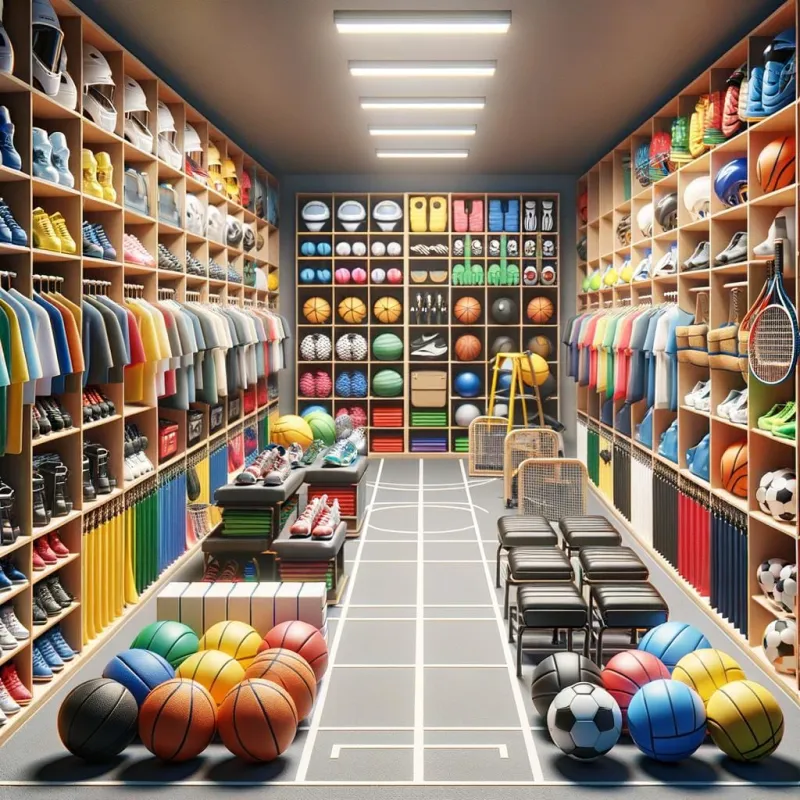
Photo: professional athlete equipment room gear storage organized sports, via www.declutteringsolutions.com
Walk into the equipment room of any professional sports franchise and you will likely encounter a paradox: shelves stocked with gear that appears perfectly serviceable, tagged for disposal. Shoes with minimal outsole wear. Compression garments with no visible fraying. Helmets without a single visible scratch. To the untrained eye, this looks like waste. To the performance scientist, it represents disciplined resource management.
The distinction between durability and performance lifespan is not semantic — it is the difference between gear that holds its shape and gear that continues to do its job at the level elite competition demands.
Micro-Degradation: The Invisible Performance Tax
Every piece of athletic equipment begins degrading the moment it is first used. Most of this degradation is imperceptible through visual inspection or casual handling. What changes first is almost always mechanical: the cellular structure of foam midsoles compresses under repeated load cycles, losing their ability to return energy efficiently. Carbon fiber plates in performance footwear develop micro-fractures too small to see but large enough to reduce propulsive force transmission. The elastane fibers woven into compression apparel gradually lose their tension memory after repeated stretching and washing cycles.
Research in materials science has long documented that polymer foams — the primary cushioning material in athletic footwear — can lose between 20 and 40 percent of their energy return properties within the first several hundred miles of use, depending on athlete body weight, surface type, and training intensity. For a 200-pound linebacker or a high-mileage distance runner, that threshold arrives far sooner than the outsole would suggest.
The practical implication: a shoe that still looks good may be delivering meaningfully less than the performance it provided when new. The athlete compensates, often unconsciously, by altering gait mechanics — creating downstream stress on joints, tendons, and connective tissue that accumulates over a season.
The Compounding Effect Across a Competitive Season
Professional teams budget for gear rotation not out of excess, but out of a calculated understanding of compounding marginal losses. Consider a competitive tennis player who trains six days per week. Their court shoes may show acceptable outsole tread through the first four months of the season. But the lateral support structures inside those shoes — responsible for controlling ankle pronation during explosive directional changes — have likely been functionally compromised well before the tread wears thin.
Each practice session in degraded equipment introduces a slightly suboptimal stimulus. Over hundreds of sessions, those micro-inefficiencies aggregate into measurable performance decline and elevated injury risk. This is why many professional teams in the NFL, NBA, and Major League Baseball operate on scheduled replacement cycles tied to usage metrics rather than visual condition assessments.
The concept is not unlike preventive maintenance on high-performance machinery. A Formula 1 team does not wait for a component to fail before replacing it — they operate on precise intervals calibrated to material fatigue thresholds. The same logic applies to the human-equipment interface in professional sport.
Consumer Durability vs. Pro-Grade Performance Lifespan
The athletic equipment industry markets durability prominently because durability sells. A running shoe advertised to last 500 miles is a compelling value proposition for the recreational jogger. But professional athletes and serious competitors require a more nuanced framework.
Consumer-grade durability refers to how long a product maintains its structural integrity and basic function under average use conditions. Pro-grade performance lifespan refers to how long a product continues to deliver the specific performance characteristics — energy return, stability, traction, compression — for which it was selected.
These two timelines rarely align. A high-performance basketball shoe may retain its structural integrity for 18 months of recreational use while losing its optimal lateral containment and court-feel responsiveness within the first three to four months of daily professional practice. The shoe still works. It no longer performs at the level that justifies its presence in a competitive context.
At SportsProMax, the gear we carry is engineered to pro-grade performance specifications — which also means it is designed with a performance lifespan in mind, not merely a durability lifespan. Understanding this distinction empowers athletes at every level to make smarter investment decisions.
Recognizing Functional Decline Before It Costs You
For serious athletes who lack the equipment budgets of professional franchises, developing a personal assessment framework is essential. Several practical indicators signal that gear has crossed from functional to performance-compromised:
Footwear: A simple test involves pressing your thumb firmly into the midsole heel. New foam should resist compression and spring back immediately. Foam that compresses easily and recovers slowly has lost significant energy return capacity. Additionally, monitor for any asymmetry in wear patterns — uneven midsole compression can introduce subtle gait imbalances.
Compression apparel: If a compression garment no longer requires effort to put on, or if you notice it shifting position during training rather than maintaining consistent contact with the targeted muscle groups, the elastic fibers have degraded past their performance threshold.
Protective gear and helmets: Padding materials inside helmets and shoulder pads are subject to the same foam degradation dynamics as footwear midsoles. Most helmet manufacturers recommend replacement cycles based on impact exposure rather than calendar time — a protocol worth following rigorously.
Rackets, clubs, and composite equipment: Carbon fiber and composite materials develop internal micro-fractures that do not affect everyday function but meaningfully reduce vibration dampening and power transfer. If your racket or club begins to feel subtly different at contact — harsher, less responsive — the composite structure may have reached its performance limit.
Building a Rotation Strategy That Fits Your Budget
Not every serious athlete can afford to replace gear on a professional team's timeline, nor does every training context demand it. However, a tiered replacement strategy can help prioritize spending where performance degradation matters most.
High-contact, high-load items — footwear and protective gear — should be prioritized for more frequent replacement because they bear the greatest mechanical stress and have the most direct impact on injury risk. Apparel and accessories can typically follow a longer cycle, monitored through functional testing rather than fixed intervals.
Tracking usage is more reliable than tracking time. A training log that records miles run, hours on the court, or sessions completed provides a far more accurate picture of equipment stress than a calendar date. Many elite athletes maintain equipment logs precisely for this reason.
Finally, consider staggering the introduction of new gear to avoid simultaneous adaptation demands. Replacing shoes, compression gear, and a training tool at the same time forces the body to adjust to multiple new stimuli at once — a recipe for disrupted performance rhythm. Rotate one category at a time, allowing a two-to-three-week adaptation window before introducing the next change.
The Hidden Cost of Waiting Too Long
The counterargument to frequent gear rotation is straightforward: replacement costs money. The counterpoint is equally direct: the cost of degraded performance and elevated injury risk over a competitive season frequently exceeds the cost of timely equipment replacement.
For the serious athlete, gear is not a consumer product to be used until it fails — it is a performance tool to be managed with the same discipline applied to training load, nutrition, and recovery. Retiring equipment before it visually wears out is not extravagance. It is professional practice.