Priced to Perform, Built to Break: The Engineering Trade-Offs Behind Premium Sports Equipment
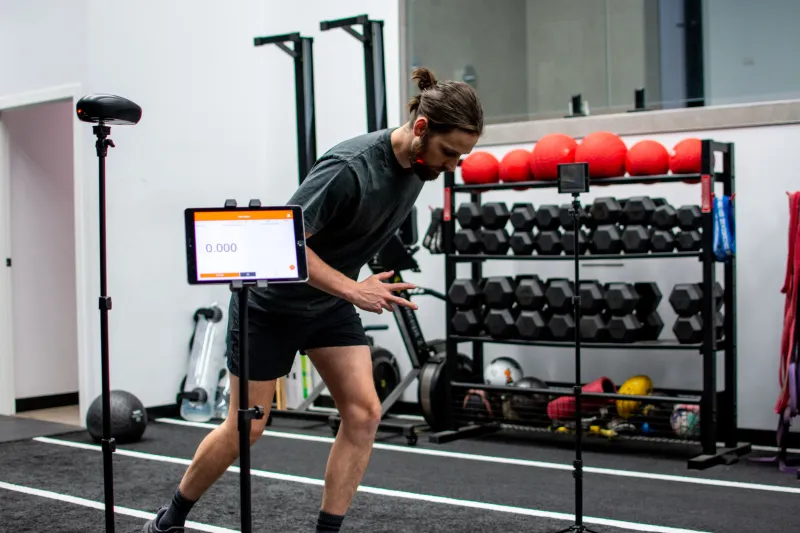
Photo: athlete examining carbon fiber sports equipment in professional training facility, via images.squarespace-cdn.com
There is a deeply held assumption in competitive athletics that a higher price tag is a reliable proxy for quality—and by extension, longevity. Walk into any specialty sporting goods store, and the premium shelf implies permanence. Yet coaches, equipment managers, and elite athletes across disciplines will quietly confirm what material scientists have documented for years: the most expensive gear in a category is frequently the first to fail under the demands of serious training. Understanding why requires a closer look at what premium manufacturers are actually engineering for—and what they are deliberately leaving behind.
Performance Optimization Is Not the Same as Durability Engineering
At the core of this paradox lies a fundamental engineering tension. When manufacturers design equipment for elite-level performance, they are optimizing for a specific constellation of properties: minimal weight, maximal energy return, precise responsiveness, and aerodynamic efficiency. Achieving those properties often demands materials and construction techniques that are inherently less robust under repeated mechanical stress.
Consider carbon fiber, a material that has become synonymous with professional-grade equipment across cycling, track and field, and racket sports. Carbon fiber composites deliver an extraordinary strength-to-weight ratio in controlled, directional loading scenarios. However, they are notably vulnerable to impact fatigue and delamination when subjected to the lateral, multidirectional forces common in real-world athletic training. A carbon-fiber road cycling frame engineered to shave 200 grams off a competitor's total system weight may not tolerate the cumulative vibration of 10,000 training miles the way a comparable aluminum alloy frame would.
The same principle applies to running footwear. Super-shoes built around nitrogen-infused foam compounds and carbon fiber plates have demonstrably improved marathon times across the competitive spectrum. Yet independent testing conducted by institutions including the University of Colorado's Locomotion Lab has consistently shown that the performance properties of these foams degrade significantly within 200 to 300 miles—a fraction of the lifespan typical of conventional EVA-based training shoes.
The Weight Reduction Penalty
The pursuit of reduced weight is perhaps the single most consequential driver of the durability paradox. In many sports, even marginal reductions in equipment mass translate directly to measurable performance gains. A 50-gram reduction in a running shoe's stack weight, for instance, is estimated to reduce the metabolic cost of running by roughly one percent—a meaningful margin at the elite level.
To achieve those reductions, manufacturers thin structural components, substitute dense materials for lighter composites, and reduce the volume of cushioning and protective elements. Each of those decisions introduces a corresponding reduction in the material's capacity to absorb and distribute repetitive stress. The result is equipment that performs brilliantly in race conditions but deteriorates at an accelerated rate under the volume demands of systematic training.
Professional athletes and their support staffs have long understood this dynamic, which is why many elite competitors maintain separate equipment inventories for competition and training. A Division I track program may issue athletes one pair of carbon-plated spikes for meets and a distinctly less glamorous—but far more durable—training flat for daily mileage. The expensive equipment is preserved precisely because it cannot withstand high-frequency use.
What Budget Equipment Gets Right
This is not an argument that inexpensive gear is superior. It is, however, an argument that budget-tier equipment often embodies a different and sometimes more practical set of engineering priorities. Mid-range and entry-level products are typically designed for broader consumer populations that include recreational athletes with inconsistent training habits, which means manufacturers build in greater structural redundancy and use materials with more forgiving fatigue characteristics.
Polyurethane midsole foams, traditional fiberglass composites, and heavier-gauge aluminum alloys are not glamorous materials. They are, however, highly predictable in their degradation patterns. An athlete using a mid-range training shoe knows that the footwear will perform consistently across its entire service life, declining gradually rather than dropping sharply past a performance cliff. That predictability has real value for training program design.
How Elite Athletes Manage the Trade-Off
Sophisticated competitors do not simply accept the durability paradox—they build strategic frameworks around it. Several patterns emerge consistently among professional athletes and their equipment managers.
Periodized equipment use: Just as training loads are periodized across a competitive calendar, so too is equipment deployment. High-performance gear is reserved for peak competition phases and key tune-up events, while training cycles rely on more durable alternatives. This approach maximizes the performance window of premium equipment while reducing the total cost of gear replacement.
Condition-based replacement schedules: Rather than replacing equipment on fixed time intervals, experienced athletes track usage metrics and monitor specific performance indicators. A swimmer might track the tension characteristics of their training suits over a documented number of pool sessions. A tennis player might string rackets based on match hours rather than calendar weeks. This data-driven approach ensures gear is replaced before degradation affects training quality.
Layered investment strategies: Elite athletes rarely invest equally across all equipment categories. Instead, they identify the two or three equipment variables that most directly influence their performance outcomes and allocate premium investment there, while accepting good-enough quality in secondary gear categories. A competitive cyclist might invest heavily in a high-performance wheelset while riding a mid-range frame during training blocks.
Rethinking the Value Equation
For serious athletes evaluating gear purchases, the most useful question is not simply whether a product justifies its price—it is whether the performance characteristics being purchased are appropriate for the intended use context. Premium equipment that delivers a measurable competitive advantage in race conditions may still represent sound value even if its training lifespan is limited, provided the athlete has a clear plan for managing that limitation.
Conversely, investing in premium gear for high-volume training use—without accounting for its accelerated degradation—is a strategy that consistently disappoints. The athlete who races in a $250 carbon-plated super-shoe and also logs 60 training miles per week in the same pair will not get 300 miles of consistent performance. They will get a shoe that feels increasingly dead well before it looks worn out.
Understanding the engineering trade-offs embedded in the equipment you use is not a peripheral concern for serious competitors—it is a core component of intelligent athletic preparation. The athletes who perform most consistently are rarely those who simply buy the most expensive gear. They are the ones who understand precisely what they bought, why it was built the way it was, and how to deploy it strategically across the full arc of a competitive season.