Beyond the Hype: A Science-Backed Guide to Recovery Technology for Competitive Athletes
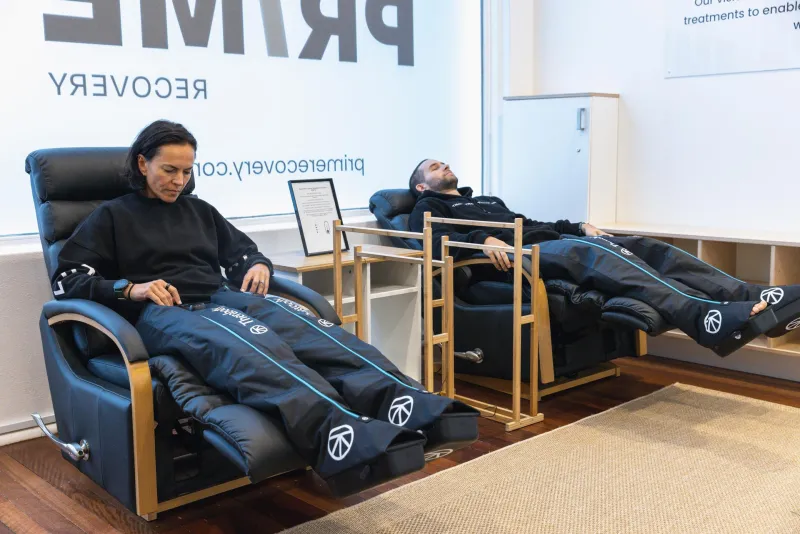
Photo: athlete using pneumatic compression boots recovery room sports training, via primerecovery.com.au
Walk into any elite training facility in the United States today and you will encounter an array of recovery devices that would have seemed futuristic a decade ago. Pneumatic compression boots line locker room walls. Infrared sauna pods occupy dedicated recovery suites. Percussive therapy guns sit on nearly every athletic trainer's table. The global sports recovery market is projected to surpass $11 billion by 2025, and serious athletes are spending accordingly.
But spending more does not automatically translate to recovering better. The critical question is not whether these devices feel good — most of them do — but whether they produce measurable, reproducible performance benefits backed by peer-reviewed research. At SportsProMax, we believe that every dollar a serious athlete invests in equipment should be justified by evidence, not endorsements. Here is what the science actually says.
Pneumatic Compression Systems: The Gold Standard of Recovery Tech
Devices such as NormaTec and Air Relax have become fixtures in professional locker rooms from the NBA to the US Olympic Training Center in Colorado Springs. These systems use sequential pneumatic compression — essentially a series of inflating chambers that move from the extremities toward the core — to accelerate venous return and lymphatic drainage.
The research here is among the most robust in the recovery technology space. A 2019 study published in the Journal of Strength and Conditioning Research found that athletes using intermittent pneumatic compression after high-intensity exercise reported significantly reduced delayed-onset muscle soreness (DOMS) at 24 and 48 hours compared to passive recovery controls. A separate meta-analysis in the International Journal of Sports Physiology and Performance confirmed modest but statistically significant improvements in subsequent performance metrics following compression therapy.
For athletes competing in multi-day tournaments — think NCAA basketball tournaments, tennis grand slams, or track and field meets — the cumulative benefit of accelerated soreness reduction can meaningfully influence performance over successive days. The investment in a quality pneumatic compression system, typically ranging from $700 to $1,500 for consumer-grade units, is justifiable for athletes training at high intensity four or more days per week.
Percussive Therapy Devices: Effective Tool or Expensive Foam Roller?
Hyperice's Hypervolt and Theragun's line of percussive massage devices have become some of the best-selling recovery tools in the American market. Their mechanism of action — rapid, targeted percussion that penetrates deep tissue — is intended to reduce muscle tension, improve range of motion, and stimulate blood flow.
The clinical evidence is more nuanced here. A 2020 study in the Journal of Clinical and Diagnostic Research demonstrated that percussive therapy was effective at reducing muscle stiffness and increasing range of motion acutely, making it a legitimate pre-activity warm-up tool. However, evidence for its superiority over traditional foam rolling in long-term recovery outcomes remains limited.
The practical advantage of percussive devices lies in their precision and accessibility. A trained athlete can target specific muscle groups with greater accuracy than foam rolling allows, and the devices require less physical effort — a meaningful consideration when an athlete is already fatigued. At price points between $200 and $600, percussive therapy guns represent a reasonable investment, particularly for strength athletes and those managing chronic soft tissue issues.
Infrared Saunas: Promising Science, Significant Caveats
Infrared sauna use has surged in popularity among American endurance athletes, with advocates citing benefits ranging from accelerated muscle repair to enhanced cardiovascular conditioning. Unlike traditional Finnish saunas, infrared units use light wavelengths to heat the body directly rather than warming the ambient air, allowing longer sessions at lower temperatures.
The most compelling research involves heat shock proteins — molecular chaperones that assist in cellular repair and are upregulated by thermal stress. A study from the University of Jyväskylä in Finland found that repeated sauna sessions following strength training increased growth hormone secretion and improved markers of muscle recovery. Additionally, research published in JAMA Internal Medicine linked regular sauna use to improved cardiovascular health outcomes.
However, athletes should approach infrared sauna use with measured expectations. The research base, while growing, is not yet as mature as that supporting compression therapy. Hydration management is also critical — sessions must be paired with aggressive fluid replacement to avoid undermining recovery rather than enhancing it. Home infrared sauna units range from $1,500 to $5,000, making them a significant investment best suited to athletes with a specific rationale for their use.
Electrical Stimulation Devices: Targeted Recovery for Strength Athletes
Neuromuscular electrical stimulation (NMES) and transcutaneous electrical nerve stimulation (TENS) devices have long been used in clinical physical therapy settings. Consumer-grade versions, such as those offered by Compex and PowerDot, have brought this technology to the training room.
NMES devices work by delivering electrical impulses that cause involuntary muscle contractions, effectively performing passive active recovery without cardiovascular demand. Research published in the European Journal of Applied Physiology found that NMES-assisted recovery significantly reduced blood lactate concentrations post-exercise compared to passive rest, suggesting genuine metabolic benefit.
For strength and power athletes — powerlifters, Olympic weightlifters, football linemen — who accumulate substantial neuromuscular fatigue, NMES represents a clinically credible recovery modality. At $200 to $500 for quality consumer units, the cost-to-benefit ratio is favorable for this specific population.
Building a Recovery Stack That Matches Your Training Load
No single recovery device addresses every physiological demand of training. The most effective approach is assembling a recovery protocol that maps to your specific sport, training volume, and budget.
For athletes training at high intensity five or more days per week, pneumatic compression and percussive therapy together form a highly evidence-supported foundation. Those competing in multi-day events should prioritize compression systems specifically. Strength athletes with high neuromuscular demands will find NMES devices a valuable complement. Infrared sauna access makes the most sense for endurance athletes with longer recovery windows and access to proper hydration infrastructure.
Perhaps most importantly, no recovery technology replaces the fundamentals: seven to nine hours of quality sleep, adequate protein intake, and periodized training that builds structured rest into the weekly schedule. Recovery devices are force multipliers — they amplify the benefits of a sound recovery foundation. Invested in without that foundation, they are expensive placebos.
The serious athlete's approach to recovery technology is the same as their approach to training: demand evidence, measure outcomes, and invest strategically. The tools that survive scientific scrutiny are the ones worth adding to your regimen.