Familiarity Is Not Performance: Rethinking Your Loyalty to Outdated Gear
The Comfort Trap in Competitive Sport
There is a particular kind of confidence that comes from using equipment you know well. Your grip settles naturally into the handle. Your stride adjusts automatically to the shoe's geometry. Your body has catalogued every quirk and compensation required, and it executes those adjustments without conscious thought. That fluency feels like mastery — but in many cases, it is simply adaptation.
Adaptation and optimization are not the same thing. An athlete who has spent two seasons adjusting their mechanics to accommodate a marginally ill-fitting shoe is not performing optimally; they are performing efficiently within a constrained system. The distinction matters enormously, and it is one that even highly experienced competitors routinely overlook.
Gear loyalty is, in many respects, a rational response to an irrational problem. Switching equipment mid-career introduces variables. It disrupts rehearsed movement patterns, demands cognitive bandwidth during training, and carries the psychological weight of uncertainty. These are real costs. What athletes frequently fail to account for, however, is the ongoing cost of staying with equipment that has either degraded or was never ideally matched to their current biomechanical profile in the first place.
The Psychological Architecture of Equipment Attachment
Sports psychology research has long documented the concept of the status quo bias — the tendency for individuals to prefer existing conditions over alternatives, even when objective data favors change. In athletic contexts, this bias is amplified by several compounding factors.
First, there is the issue of sunk cost reasoning. An athlete who has invested significant time breaking in a pair of cleats or calibrating a racket's string tension is reluctant to abandon that investment, even when the equipment no longer serves their needs. The hours spent adapting feel like they should count for something — and psychologically, they do, even when they no longer translate into measurable performance gains.
Second, confirmation bias shapes how athletes interpret performance data. When you are using familiar gear, a strong result confirms the equipment's value. A poor result is attributed to execution, conditions, or fatigue. When testing new gear, the reverse often applies: a strong result is treated as preliminary, while any discomfort or suboptimal outcome becomes evidence that the switch was a mistake. This asymmetry makes objective evaluation extraordinarily difficult without a deliberate framework.
Third, identity plays a role that is rarely discussed openly. Many athletes — particularly those who have competed at a high level for several years — incorporate their gear preferences into their competitive identity. The shoe brand, the equipment manufacturer, the specific model: these become part of how an athlete understands themselves as a competitor. Challenging that equipment is, in a subtle but real sense, challenging the athlete's self-concept.
Biomechanical Friction: What the Body Hides
Beyond psychology, there is a physiological dimension to gear loyalty that deserves serious attention. When an athlete uses the same equipment over an extended period, the neuromuscular system develops compensatory patterns that are largely invisible to conscious awareness.
Consider a distance runner who has used the same stability shoe model for three years. During that period, their foot strike pattern, hip alignment, and knee tracking may have subtly shifted to accommodate minor asymmetries in the shoe's construction — asymmetries that have been exaggerated by wear. The runner is unaware of these compensations because they occurred gradually and the body's proprioceptive system normalized them long ago.
Introduce a biomechanically superior alternative, and the initial experience is likely to feel wrong. Muscles that have been underutilized will fatigue more quickly. Movement patterns will feel unfamiliar. The athlete will almost certainly interpret this as evidence that the new gear is inferior — when in fact, the discomfort signals that the body is being asked to operate more correctly than it has in years.
This is the central paradox of equipment transitions: superior gear frequently performs worse in the short term precisely because it demands more from the athlete.
Building an Objective Evaluation Protocol
The solution is not to avoid gear transitions — it is to evaluate them systematically, under controlled conditions, with clearly defined metrics that resist psychological distortion.
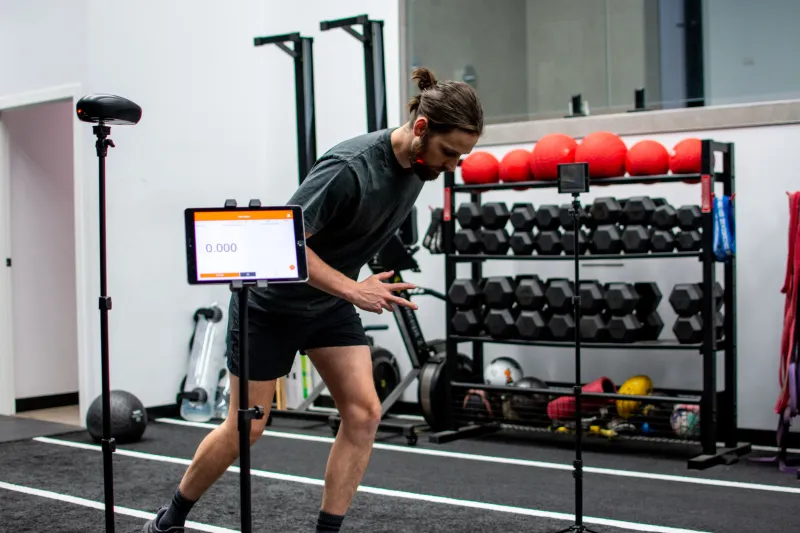
Step one: Establish a performance baseline. Before introducing any alternative equipment, spend two to three weeks documenting your current performance across a defined set of measurable outputs. Depending on your sport, this might include split times, power output readings, accuracy percentages, or recovery metrics. This baseline is your control group.
Step two: Isolate the variable. When testing new gear, change only one piece of equipment at a time. Introducing a new shoe, a new training surface, and a new training block simultaneously makes it impossible to attribute performance changes to any single factor. Discipline in isolation is essential to drawing valid conclusions.
Step three: Schedule the transition strategically. The optimal window for testing new equipment is during a lower-stakes training block — not immediately before a major competition. For most athletes competing on a seasonal calendar, this means introducing alternatives during the early-to-mid preparatory phase, allowing four to six weeks of evaluation before any meaningful competitive pressure arrives.
Step four: Separate subjective comfort from objective output. Maintain a training log that distinguishes between how the equipment feels and what your performance metrics actually show. These two data streams will frequently diverge, particularly in the first two weeks of a transition. Trust the numbers over the sensation, while acknowledging that extreme discomfort or pain signals a genuine fit problem rather than simple adaptation.
Step five: Apply a reversion test. After four weeks with the new equipment, return to your original gear for one week. Athletes who have made a genuine upgrade often find the return to familiar equipment surprisingly uncomfortable — a clear signal that their body has recalibrated to a higher standard.
When Loyalty Is Actually Justified
It would be a disservice to suggest that gear loyalty is always misplaced. There are legitimate scenarios in which an athlete's current equipment represents a genuinely optimal configuration for their body and sport demands. Experienced athletes who have undergone formal biomechanical assessment, who update their gear on a disciplined replacement schedule, and who have systematically compared alternatives are in a fundamentally different position than those who simply continue using what they have always used.
The goal is not to create change for its own sake. The goal is to ensure that your equipment choices are the product of deliberate evaluation rather than inertia. There is a meaningful difference between an athlete who has tested alternatives and concluded that their current setup is superior, and one who has simply never seriously questioned it.
The Competitive Advantage of Intellectual Honesty
At SportsProMax, we work with athletes across a wide range of disciplines and competitive levels, and one pattern appears consistently among those who perform at the highest tier: they treat their equipment with the same analytical rigor they apply to their training methodology. They ask hard questions. They test assumptions. They are willing to accept short-term disruption in exchange for long-term gain.
Gear loyalty, unchallenged, is a performance ceiling. The athlete who mistakes comfort for optimization will eventually be surpassed by the one who does not. Building a practice of honest, evidence-based equipment evaluation is not a minor operational detail — it is a competitive discipline in its own right, and one that separates those who train seriously from those who compete to win.