The Pro Equipment Divide: Understanding the Gap Between Sponsored Athlete Gear and What You Can Actually Buy
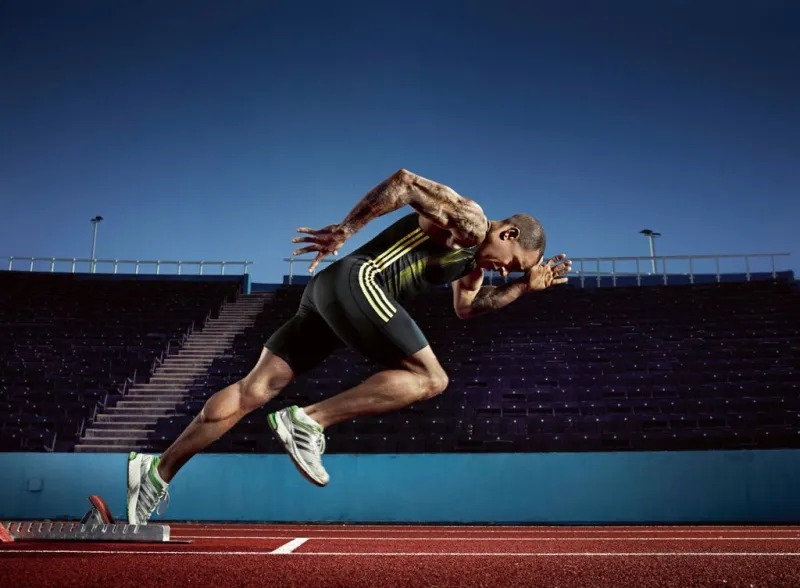
When a sponsored professional athlete crosses the finish line, stands on the podium, or breaks a world record, the equipment they are using almost certainly does not match the product you will find under that same brand name at your local retailer or on the brand's website. This is not a conspiracy. It is standard industry practice, openly acknowledged within professional athletic circles and rarely discussed in the consumer-facing marketing that surrounds those same products.
For serious amateur athletes investing significant resources in their equipment, understanding this divide is not merely interesting — it is operationally relevant.
How the Sponsored Gear System Actually Works
Major sports equipment brands maintain separate product development pipelines for their sponsored athlete programs and their commercial retail lines. The sponsored athlete pipeline is driven by performance engineering without commercial constraint: materials are selected for optimal function regardless of manufacturing cost, fit is customized to individual athlete anthropometrics, and prototypes are iterated continuously based on athlete feedback during actual competition.
The commercial retail pipeline operates under an entirely different set of constraints. Retail products must be manufacturable at scale, price-accessible across a range of consumer income levels, durable enough to survive general consumer use patterns, and standardized enough to be sized across a population. These constraints are legitimate and necessary for a commercially viable product. They also mean that the retail version of any given product has been engineered away from the performance ceiling toward a balance point between cost, durability, and broad-market usability.
The gap between these two pipelines varies by brand and product category, but in high-performance categories — elite footwear, competitive cycling components, elite-tier swim equipment — it is rarely trivial.
Documented Differences Across Equipment Categories
Footwear: Sponsored runners at the elite level frequently receive shoes with custom last shapes matched to their specific foot geometry, midsole compound formulations adjusted to their body weight and foot strike mechanics, and upper constructions that are lighter than production versions by as much as 15 to 20 percent. When a brand releases a "pro version" of a shoe, it is often still not the version the sponsored athlete is actually competing in — it is a commercially viable approximation.
Cycling components: Professional cyclists competing in Grand Tour events ride components that are frequently custom-weighted, custom-finished, and in some cases structurally different from the production versions bearing the same model designation. Crankarm lengths, handlebar reach dimensions, and saddle shell geometries are routinely customized to individual athlete measurements in ways that production lines cannot replicate.
Swim equipment: Elite-tier competitive swimsuits worn by sponsored swimmers at major international competitions are often hand-constructed from material lots that have been selectively tested for hydrodynamic properties before allocation to the sponsored athlete program. The same suit model sold commercially is produced from standard material lots without that level of selection.
Why Brands Maintain This Gap Intentionally
It is worth understanding that maintaining a performance gap between sponsored and consumer products is not simply an artifact of manufacturing economics — it is, in part, a deliberate strategic choice. The sponsored athlete serves as a walking advertisement for the brand. If the exact equipment used by a world champion were available to any recreational athlete, the exclusivity signal that professional performance provides to the brand would be diluted.
There is also a safety and liability dimension. Equipment engineered to the absolute performance ceiling, without the durability and usability compromises built into commercial products, is not appropriate for general consumer use. A racing tire inflated to the pressure a professional cyclist uses on a controlled velodrome would be dangerous on public roads under general riding conditions.
Reverse-Engineering the Pro Advantage: A Practical Playbook
Despite the structural gap, serious amateur athletes have meaningful options for closing the distance between consumer-grade and sponsored-athlete performance. The following framework represents the most practical approaches available.
1. Identify the top-tier commercial offering in each category. Most major brands maintain a tiered product line where the highest commercial tier — while not identical to the sponsored athlete version — is engineered closer to the performance ceiling than mid-tier products. Investing in the top commercial tier is the single most direct path to accessing the closest available approximation of sponsored athlete equipment.
2. Pursue custom fit where it is accessible. Custom insole fabrication, professional bike fitting with component adjustments, and custom wetsuit ordering are all commercially available services that replicate one of the most significant advantages of sponsored athlete programs: individualized fit. A properly fitted mid-tier product will frequently outperform an ill-fitted premium product for a specific athlete's anatomy.
3. Monitor prototype and limited-release channels. Brands regularly release limited commercial quantities of equipment that is closer to the sponsored athlete specification — often ahead of full commercial production as market testing vehicles. Following brand athlete liaison accounts, competitive equipment forums, and specialty retailer networks provides early access to these releases before they are absorbed into the standard retail assortment.
4. Leverage the secondary market for discontinued performance tiers. When brands retire a product line in favor of a new commercial direction, the discontinued product often remains available through secondary retail channels at reduced prices. In some categories, a two-generation-old top-tier product outperforms a current mid-tier product at a fraction of the price.
5. Apply structured testing protocols before committing. One of the underappreciated advantages of the sponsored athlete system is that professionals test equipment under real competition conditions before adopting it. Serious amateur athletes can replicate this advantage by treating every significant gear acquisition as a structured trial: establish baseline performance metrics, implement the new gear under controlled training conditions, and measure the outcome before committing the equipment to competition use.
The Competitive Takeaway
The professional sponsorship system creates a genuine performance tier that consumer markets cannot fully access. Acknowledging that reality is the first step toward working around it intelligently. The athletes who close this gap most effectively are not those who spend the most money — they are those who understand the system well enough to make targeted, evidence-based decisions within the options that are actually available to them.
At SportsProMax, our position is straightforward: informed athletes make better equipment decisions than uninformed ones, regardless of budget. The sponsored athlete advantage is real, but it is not insurmountable for the serious competitor who approaches gear selection as a discipline in its own right.