Stress Test Before You Compete: A Practical Framework for Validating New Gear Before Race Day
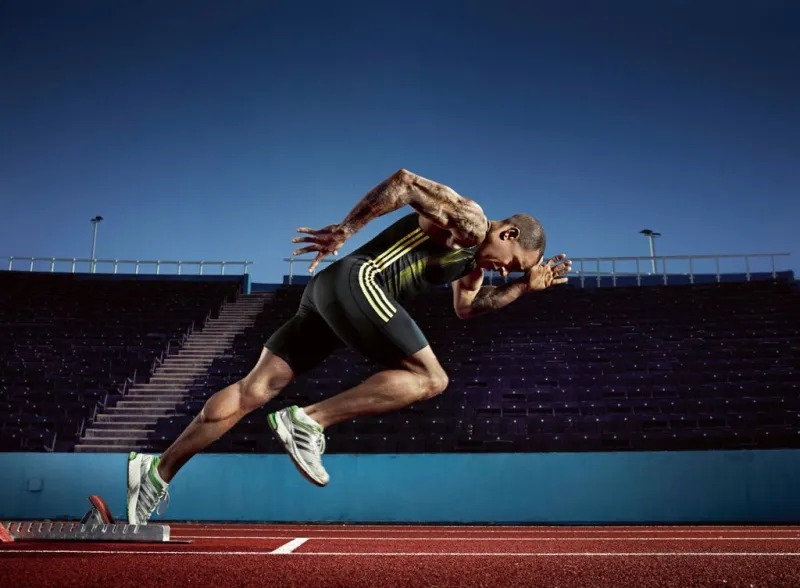
Photo: athlete testing sports equipment outdoors training session, via bocancea.com
The Problem With Trusting New Gear Immediately
New equipment carries an implicit promise: it is fresh, uncompromised, and engineered to perform. That promise, however, is conditional. It assumes the gear fits correctly, that it has been properly broken in, that its performance characteristics match the athlete's biomechanical demands, and that it will hold up under the specific stress profiles of competition. None of these conditions can be confirmed through inspection alone.
Every experienced competitive athlete has a story about gear that failed at the worst possible moment—a cleat that separated from its upper during a playoff match, a hydration pack bladder that developed a leak mid-race, a cycling derailleur that performed flawlessly in training and seized under race-pace effort. In most of these cases, a structured pre-competition validation process would have surfaced the problem before it mattered.
This is the foundation of sport-specific load testing: a deliberate, methodical approach to verifying that new equipment will perform under the precise conditions of competition, not just under the comfortable conditions of a casual training session.
The Principle Behind Load Testing
Load testing, in an engineering context, refers to applying controlled stress to a system to verify its performance and identify failure thresholds before deployment in a critical application. Aerospace engineers do it. Software developers do it. Civil engineers do it before a bridge opens to traffic.
Serious athletes do it too—often without using that terminology—because the performance consequences of untested gear are real, measurable, and frequently avoidable.
The underlying principle is straightforward: new gear should be subjected to conditions that replicate or exceed the demands of competition before it is trusted in that environment. The specifics of how that is accomplished vary by sport, equipment type, and available resources, but the logical framework applies universally.
Establishing Your Competition Stress Profile
Effective gear validation begins with a clear, honest assessment of what competition actually demands from a specific piece of equipment. This is the athlete's stress profile, and it should be as precise as possible.
A trail runner preparing for a 50-kilometer race in the Cascades faces a different stress profile than a road marathoner targeting a flat urban course. The trail runner's footwear will experience lateral loading on uneven terrain, prolonged exposure to moisture, and significant downhill braking forces. The road marathoner's footwear will experience high-repetition vertical loading on a predictable surface. Validating new trail shoes requires replicating the former set of conditions—not just logging easy miles on a track.
Athletes should document their competition stress profile in writing before beginning any validation protocol. Key variables to consider include: peak force demands (sprinting, jumping, cutting), duration of sustained effort, environmental conditions (heat, humidity, precipitation), surface type, and any sport-specific movement patterns that place unusual demands on specific equipment components.
Practical Validation Protocols by Equipment Category
Footwear
For performance footwear, a graduated loading protocol is the most reliable validation approach. Begin with low-intensity sessions on the specific surface type the shoe will encounter in competition. During these sessions, pay close attention to fit under load—note whether the heel locks securely during acceleration, whether the toe box allows adequate splay during push-off, and whether any pressure points emerge that were absent during static fitting.
Progress to competition-intensity efforts across at least three separate sessions before trusting new footwear in a race environment. The third session is particularly informative: it exposes any fit issues that only become apparent after initial compression of the insole and upper materials.
For cleated footwear, specific attention should be directed at cleat-to-plate interface integrity. Apply lateral force to each cleat by hand before each session and after each session to detect any loosening that may not be visible. A cleat that feels secure before a session but shows measurable play afterward is signaling a thread engagement issue that will worsen under sustained competition loading.
Load-Bearing Straps, Harnesses, and Packs
Hydration packs, race vests, and weight-bearing harnesses should be tested at full competition load—not at a reduced weight—before competition. Fill the pack or vest to the maximum weight it will carry on race day and complete a session of at least 60 percent of competition duration. Inspect all strap attachment points, buckle housings, and seams after the session.
For athletes competing in longer events such as ultramarathons or adventure races, this testing should include conditions that replicate late-race fatigue, when altered biomechanics place different loading patterns on carrying systems than fresh-start movement does.
Composite Equipment: Rackets, Shafts, and Frames
For composite equipment, the most accessible pre-competition validation method involves deliberate loading at the equipment's functional stress points. A lacrosse shaft, for example, should be subjected to controlled flexion loading—held at both ends and carefully deflected to simulate the forces of a body check or ground ball contest—while the athlete observes for any auditory indication of internal delamination (a faint crackling sound under flex) and checks for any visible surface micro-cracking under bright light.
A tennis racket's string bed tension should be verified with a stringing machine or portable string tension tool before competition, as tension loss beyond manufacturer tolerances indicates either a stringing defect or a frame that has experienced structural compromise during shipping or storage.
Cycling Components
For competitive cyclists, drivetrain components deserve particular scrutiny under load. A new derailleur or cassette combination that shifts cleanly at moderate effort may hesitate or drop a chain under the high-torque demands of a race climb. Validate shifting performance specifically during hard efforts—sustained threshold efforts on a climb, not just easy spinning on flat terrain—across multiple sessions before a target event.
Brake systems should be tested on the specific grade profiles expected in competition. A hydraulic disc brake that modulates beautifully on a flat training loop may exhibit fade or inconsistent lever feel on a prolonged mountain descent. If the target event includes significant descending, that condition must be replicated in validation.
Documenting Results and Making Go/No-Go Decisions
The validation process is only as useful as the decisions it informs. After each testing session, athletes should record specific observations: any fit anomalies, performance inconsistencies, unusual sounds or sensations, and any signs of premature wear or structural concern.
A simple go/no-go decision framework helps translate those observations into actionable choices. If new gear completes three sport-specific sessions at competition intensity without producing any negative observations, it has earned provisional competition clearance. If any session produces a concern—however minor—that concern should be investigated before the gear is trusted in competition.
This framework requires discipline, particularly when a competition date is approaching and an athlete is eager to debut new equipment. The professional standard is unambiguous: gear that has not been validated does not belong in competition. The risk calculus is straightforward, and the preparation investment required to validate gear properly is modest compared to the cost of a preventable failure when it matters most.